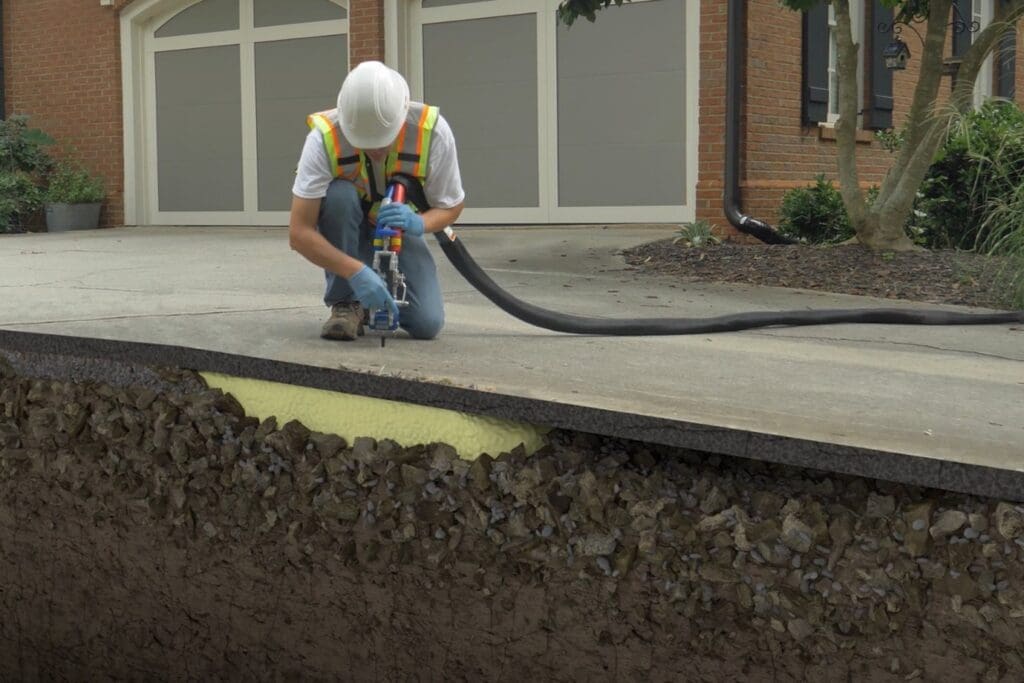
Fast, clean, and cost-effective polyurethane slab lifting. Fix sunken driveways, paths, floors & more without ripping up concrete with our non-invasive Geofix slab lifting solution.
Concrete Lifting & Levelling in Auckland
Schedule your free evaluation today!
When we say free, we mean FREE. No hidden fees and absolutely no pushy sales tactics. We will contact you within 24 hours!
Sunken or Uneven Concrete? Lift It – Don’t Replace It
Are you tired of tripping over an uneven concrete slab or watching water pool in your sunken driveway? When a concrete floor, patio, or path starts to shift and drop, it impacts safety, drainage, and property value. Traditionally, the only option was messy, costly concrete replacement.
Grace Foundation Solutions, through our specialised Geofix division, offers the more innovative solution: concrete slab lifting and levelling using advanced polyurethane injection. This non-invasive technique resolves the problem by filling the void beneath the slab and gently raising it back to level. It’s the fastest, cleanest, and most affordable way to restore stability and appearance without the demolition, mess, or disruption associated with traditional concrete replacement.
If you are dealing with a concrete slab sink problem, learn why concrete lifting is the preferred method for residential, commercial, and industrial clients across Auckland.
Why does Concrete Sink or Crack in Auckland?
Concrete slabs don’t sink because they are too heavy; they sink because the ground beneath them fails to support them. This loss of sub-base support is a common issue in Auckland due to New Zealand’s reactive soil conditions.
The primary culprits behind concrete slab sinks and cracking are:
- Soil Erosion or Poor Compaction: Water penetration from drainage issues washes away soil or poorly compacted fill material, creating a void under the slab.
- Expansive Clay Soils: Auckland’s clay soils swell when wet and shrink when dry. This cyclic volume change causes relentless ground stabilisation issues, leading to movement and settlement.
- Groundwater or drainage problems, such as leaking pipes, faulty gutters, or poor surface drainage, can saturate the sub-base, weakening its load-bearing capacity.
- Tree Root Intrusion: Tree roots can absorb excessive moisture from the ground, causing the soil to shrink and the slab to drop into the resulting void.
- Heavy Traffic Over Time: Repeated heavy loads on driveways or industrial floors can compress the sub-base, leading to fatigue and settlement.
Common Questions About Concrete Slab Lifting And Levelling
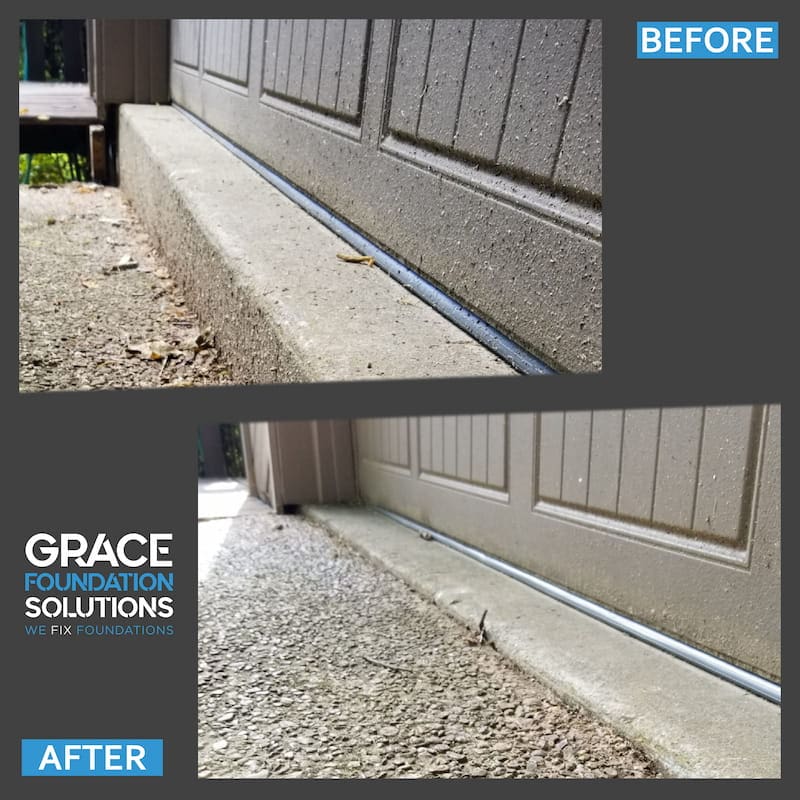
Concrete slab lifting and levelling fixes sunken or uneven concrete by returning it to its original place. In New Zealand, we use polyurethane foam or resin injection. This method is noninvasive and cost-effective, and it is a good alternative to replacing the whole slab.
The leading causes are soil erosion, loose fill, water leaks, tree roots, and natural ground settling. Waterlogged soils often cause problems in coastal areas and places with heavy rain in New Zealand.
Two main methods are used:
- Polyurethane foam resin injection: This method is lightweight, long-lasting, and causes minimal disruption.
- Mudjacking: This method uses cement grout pumping. It is heavier and may cause more soil settlement over time.
Costs vary depending on slab size, accessibility, and method used. Polyurethane resin lifting usually costs between NZ$500 and NZ$3,500 or more for each job. Mudjacking may be cheaper at first, but it is not as durable.
Yes, in most cases. Lifting is faster and cleaner. It usually costs 50–75% less than full replacement. It also lets you use the slab almost right after the repair.
Most jobs are completed in a few hours, with slabs usable the same day. Polyurethane resin injection cures within 15 minutes, making it highly efficient compared to full replacement, which may take days.
Polyurethane foam resin lifting usually lasts 10 to over 20 years. This depends on soil conditions and drainage. Good site preparation and fixing soil problems can make it last longer.
Most residential driveways, patios, footpaths, and commercial slabs can be lifted. However, some exceptions exist. These include slabs with severe cracks, structural problems, or soil washout that needs digging.
No, the process is not invasive. It only needs small drill holes that are patched to match the slab. Landscaping and nearby structures are usually not affected.
Advanced Polyurethane Injection for Concrete Levelling
Our Geofix solution, often referred to as foam injection concrete lifting or polyurethane injection in Auckland, is a state-of-the-art alternative to traditional slab jacking (also known as mudjacking). It is highly precise, minimally invasive, and requires almost no downtime.
The Non-Invasive Process:
- Preparation: We drill small, pencil-sized injection holes (typically less than 16mm) strategically across the sunken section of the slab.
- Injection & Void Filling: High-density, liquid polyurethane resin is injected through these ports into the void beneath the concrete.
- Expansion & Lifting: Once injected, the resin rapidly expands and lifts. This expansion serves two purposes: first, it fills the empty spaces (void filling), and second, the expanding pressure gently lifts the slab with precision.
- Levelling & Stabilisation: The process continues until the slab is brought back to the desired level. The resin cures quickly, providing immediate ground stabilisation.
Key Benefits:
- Fast & Clean: The process is completed in days, not weeks, with almost zero mess and no need for excavation. You can often use the area within hours.
- Cost-Effective: Sunken concrete repair using this method is significantly more affordable than demolition, removal, and replacement.
- Long-Lasting & Water-Resistant: The cured resin is lightweight, waterproof, and extremely durable, providing superior ground stabilisation and protection against future erosion.
- Non-Invasive: Small injection points mean minimal impact on surrounding landscaping or structures.
This revolutionary technology makes precise concrete levelling in Auckland achievable with minimal disruption.